

London, United Kingdom – September 2026 — Oxford and Bboxx’s award-winning battery innovation demonstrates what becomes possible when connected assets, operational data and intelligent software come together at scale.
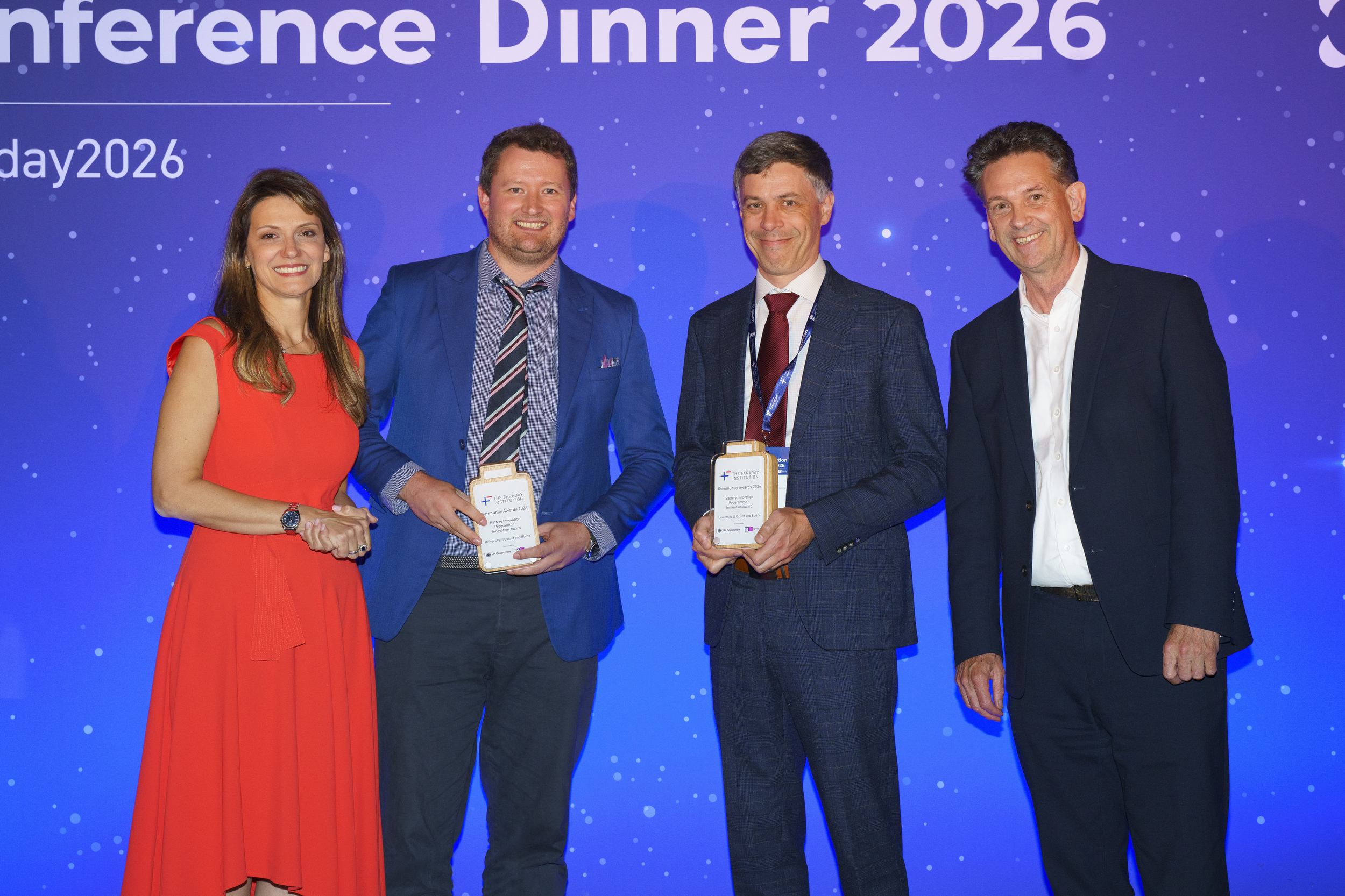
The University of Oxford and Bboxx have been recognised with the Battery Innovation Programme – Innovation Award at the Faraday Institution Community Awards 2026, celebrating a long-standing collaboration that has translated battery research into measurable real-world impact.
Led by Professor David Howey at Oxford Engineering and Chris Baker-Brian at Bboxx, the collaboration has pioneered the use of large-scale real-world battery telemetry, advanced modelling and machine learning to improve battery lifetime, reliability and sustainability for off-grid energy users across Africa.
For Asopo Technologies, the achievement has particular significance.
It demonstrates the potential of something that sits at the heart of the technology Asopo is taking to the wider market through Pulse: turning years of operational data from distributed assets into intelligence that can drive better decisions.
“This award is a powerful example of what becomes possible when world-class research meets technology and real-world data at scale. Over more than a decade, Pulse has helped Bboxx connect and manage hundreds of thousands of distributed assets, creating an extraordinary depth of operational data. Through Asopo, we now have the opportunity to take that same proven infrastructure and data-driven approach to other businesses across emerging markets — helping them move beyond simply managing operations towards using intelligence to make better decisions.”
Chris Baker-Brian, Co-founder of Bboxx/Asopo Technologies
From 700,000+ connected devices to battery intelligence
Battery research have traditionally relied heavily on controlled laboratory testing. But batteries deployed across real-world environments behave differently — influenced by usage patterns, environmental conditions and the way individual systems are operated.
Over more than a decade, the Oxford-Bboxx collaboration has taken a different approach.
Researchers have combined advanced battery science, modelling and machine learning with hundreds of gigabytes of real-world telemetry from more than 700,000 connected devices deployed across over 10 African countries.
This extraordinary dataset has enabled research that would otherwise have been difficult to replicate in laboratory environments alone.
Using real-world operating data, the collaboration has developed new approaches to battery diagnostics, degradation modelling, end-of-life prediction and lifetime extension — advancing how battery health can be understood and managed across large distributed fleets.
Turning research into operational impact
The real value of data and research emerges when insight translates into action.
In Rwanda, a battery lifetime extension field trial brought together researchers, engineers, customer support teams and local technicians to test new battery management strategies on operational systems.
The trial demonstrated battery lifetime improvements of up to 25% on older lead-acid systems.
The findings are now informing revised charging protocols across Bboxx’s lead-acid solar home systems, with the potential to improve reliability for customers while reducing battery replacement costs, material consumption and waste.
This is a powerful example of the feedback loop created when research, software and real-world operations work together:
- Operational assets generate data
- Data enables research
- Research creates intelligence
- Intelligence improves how assets are managed
From monitoring assets to predicting their future
The collaboration is now moving beyond understanding historical battery performance towards predicting what happens next.
Oxford-developed battery health diagnostic algorithms are being incorporated into Asopo platform, while the ongoing UniBatt project aims to integrate battery lifetime prediction algorithms into Asopo for fleet health monitoring.
This could ultimately support better life prediction, maintenance and pricing decisions across distributed battery fleets.
The project is also exploring a flexible, modular battery pack that could be used across different manufacturers’ e-motorcycles — with the resulting battery fleet capable of being fully managed through the Asopo platform.
It points towards a future where distributed assets are not simply connected and monitored. They become increasingly intelligent.
The Asopo connection
Asopo was originally developed within Bboxx to manage the complexity of large-scale distributed operations across multiple African markets.
Over time, it became the digital backbone connecting financed assets, customer journeys, payments and operational workflows. Today, Asopo Technologies commercialises the platform for other businesses operating across asset finance, microfinance, digital lending and other distributed business models.
The Oxford-Bboxx collaboration provides a compelling demonstration of the technological environment from which that platform emerged.
Asopo was not developed around theoretical use cases. It evolved within live operations, where millions of transactions, connected assets and customer interactions continuously generate real-world operational data.
Asopo is now taking that proven infrastructure to the wider market.
Beyond batteries: the value of operational intelligence
For Asopo, the significance of this story extends beyond energy storage.
The underlying principle can apply wherever organisations manage large portfolios of financed customers and distributed assets.
Operational infrastructure creates data. And when that data is structured, connected and analysed effectively, it can become an intelligence layer for better decision-making.
Across Asopo today, this philosophy extends into areas such as payments, credit intelligence, asset lifecycle management, field operations and portfolio analytics — using operational data to give businesses greater visibility and control as they scale.
The Oxford-Bboxx collaboration is an exceptional example of how far that principle can go.
Congratulations to the research, engineering, software and operational teams across Bboxx and Oxford University whose long-term collaboration made this recognition possible.
The award belongs to the teams behind the research and its deployment.
For Asopo, it is also a powerful demonstration of the technological heritage behind Pulse — and of what becomes possible when world-class research meets real-world data and infrastructure operating at scale.